Social Housing History: Post WWI
The early history of social housing in Britain
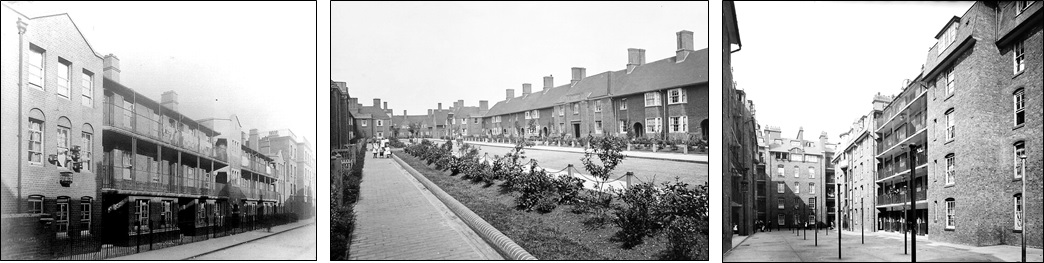
Wartime
Before moving on to the housing schemes developed after the war and to the financial schemes and Acts of Parliament to provide the impetus, it is worth understanding how worker’s housing was affected by the war. The most notable and obvious effect was the almost halting of house building in Britain. The reasons were many-fold: the labour-force signing up to fight; the diversion of funds to the war industry; and the need to construct factories and barracks in priority to housing. These issues are to be expected and have been repeated across centuries. However, World War 1 was the first in modern British history that was an industrial war – the whole country went on a war footing where equipment and munitions were the priority. Even small factories, used to building domestic articles on a small scale, turned over production to meet the military requirements of the war. These factories required workers, and on a bigger scale than before the war. This resulted in a large movement of workers across the country in search of better employment, or sometimes with little choice if their skills were needed at a new factory. The Ministry of War (Ministry of Munitions from 1915) created large munitions factories such as the National (Shell) Filling Factory No. 2 at Aintree in Liverpool, the HM Factory at Gretna on the Scottish border, and the National Projectile Factory at Templeborough (Sheffield). Although these factories made more use of female labour as the war progressed as the menfolk went into the services, they employed large numbers of people. Where were they to live?
The government built most factories near cities where the local workforce could be transported in by bus or train, but this was sometimes not enough. Factories at Queensferry (Chester) and Gretna/Eastriggs had permanent housing built for the workers as there was no suitable accommodation nearby. Woolwich Arsenal had such a large increase that a large garden suburb was built. All other factories relied on workers living nearby or being able to find accommodation at digs. The latter was seen by some as an opportunity to make a profit and increase rents. This would have seriously affected the ability of factories to encourage skilled staff to their area, and the government reacted with commendable speed to counter this. To prevent unscrupulous landlords profiteering the Rent and Mortgage Interest (War Restriction) Act, 1915 prevented landlords raising rents (and banks raising mortgage interest rates) above those in place on 3rd August 1914. This 1915 Act had minor updates in 1917 and 1918. All these Acts allowed the rents to increase by 10% (and 0.5% for mortgage rates) only 6 months after cessation of hostilities. As the next section will describe, the freezing of rents and rates were to have a significant negative impact on house construction immediately after the war, but it did have the desired affect during the war of allowing skilled workers to be able to move around the country to factories and military building projects.
The H.M. Factory near Gretna resulted in two wooden townships, at Gretna and Eastriggs, but also permanent housing in both towns. Designed by Raymond Unwin, an experienced Garden Suburb architect, the houses are relatively plain but with a hint of neo-Georgian in their styling with their large and symmetrical windows. In all, there were 287 houses and 29 hostels (converted to housing after the war). Most of the Gretna housing has lasted well but much of the Eastriggs housing seems to have have suffered over the years with many rendered over to make them look plain. Unwin also designed the housing at Mancot Royal, near Chester, to house workers at H.M. Munitions Factory, Queensferry. This development consisted of 191 houses and 6 hostels and are plainer than those in Eastriggs, but look in good condition today. To house the extra workers at Woolwich Arsenal the Well Hall Estate in Eltham was designed by architect Frank Baines to the Arts and Crafts style. This estate was completely different to the ones described above and the 1,298 dwellings were built in just 6 months to high standards that resulted in a desirable Garden Suburb, but at a considerable cost-overrun. The management of Well Hall was handed to the LCC in 1918 but the government sold the estate to the Royal Arsenal Co-operative Society who renamed it the Progress Estate. It became a Conservation Area in 1975. Well Hall also had it’s temporary “Wooden Township” housing. These four estates were the first housing developments in Britain built by the government using their own H.M. Office of Works.
Construction of working-class houses for the public only resumed after the end of the war, but only then with financial assistance from the government that emanated from a number of well-meaning, but not entirely successful, Acts of Parliament. All these were triggered by Lloyd George’s campaign of “home fit for heroes.”
Homes Fit for Heroes
Promises, promises, promises
After surviving the horrors of WW1, many returning soldiers, sailors and airmen were expecting the world to be a better place, where their life could return to some normality in a secure and safe environment and jobs for all. This expectation was raised by a speech by Lloyd George the day after the armistice where, amongst other promises, he said there would be “homes fit for heroes”. “Homes”, and not just houses; “fit”, implying built to a standard; and “heroes”, giving a sense of gratitude and deserving. Dreams never meet reality and what Lloyd George actually said was “Habitations fit for the heroes who have won the war”, which is a lot less punchy and emotive than the phrase everyone remembers, and the word “habitations” suggests something very basic. The press could not fit that sentence in a header in a newspaper column and so naturally shortened it to the phrase we now know. So, what was the result of this promise? Were those houses built all over the country immediately after the war? It will come as no surprise to historians that the reality fell a long way short of the promise, but for many reasons that even Lloyd George could not control. The legislation that followed his speech was well meaning and quite well thought through, but was hampered by two serious problems: the lack of funds; and the extreme shortage in the building industry of skilled manpower and materials.
But was there a need for housing?
Modern socialists would like to think that Lloyd George, a popular Liberal PM, and his coalition cabinet really did want slums to be demolished and all those “heroes” living in good housing. But the government had more a pressing problem to solve, and that was Bolshevism. From 1917, industry and the docks had been hit with some damaging strikes, no doubt spurred on by events in Russia in that year. The government realised they could not go head-to-head with the radicals, as Russia tried to, and so planned to improve the lives of “the workers” and defeat this new and worrying movement. The government created a Ministry of Reconstruction in 1917, headed by the very capable Christopher Addison. The term “reconstruction” was not in the context of rebuilding fallen property, but the reconstruction of how government was organised. Its recommendations covered many subjects that included, amongst other targets: a more efficient government administration; women’s roles post WW1; housing; industrial relations; and employment. The aim of the Ministry was “charged with overseeing the task of rebuilding the national life on a better and more durable foundation”. To the credit of the government, many of the recommendations were implemented and Bolshevism did not take hold as a result. The main impact on post-WW1 housing was to create a Ministry of Health under which social housing and slum clearance were managed, with a housing department and local commissioners being in control. This all became permanent in 1919. In the meantime, the Ministry of Reconstruction introduced a scheme in 1918 to subsidise some of the expected excesses in the costs to build housing. Apart from each scheme needing government approval first, there were no other restrictions. But this subsidy was too early for most local authorities as they did not have the funds for such schemes or were unable to borrow the necessary money. The London County Council (LCC) was one of the few authorities who could afford to build houses and allocated £500,000/yr towards it, although they did not build any new houses using this money because further legislation overtook the planning. The mainly rural counties were never going to be able to afford such grand schemes. This was recognised by the Ministry and the Housing and Town Planning Act, 1919 was passed that changed the way social housing could be funded. The Act was to resolve many issues highlighted by a far-reaching report in 1918 by John Tudor Walters.
The 1918 Tudor Walters Report
The government appointed architect and MP Sir John Tudor Walters to report on the condition of housing although his main role in Lloyd George’s government at the time was Paymaster General. The result was the “Report of the Committee Appointed to Consider Questions of Building Construction in Connection With the Provision of Dwellings for the Working Classes”, which inevitably everyone shortened to simply “The Tudor Walters report”. This influential report made recommendations for the design of housing and housing estates. These designs were specifically to: set minimum expected building standards and facilities (such as bath in every house); provide house designs that would be both pleasant to live in yet economical with scarce building materials; and provide useful guidance as to the layout of a scheme. A good example of the last point was to build housing in cul-de-sacs. The number of houses that could be fitted would not change but the authority would save on road-building costs when compared to a through road.
Tudor Walters’ recommended designs were known as Types “A”, “B”, “C”, “D” and “E”. Not very imaginative, but a very useful way to indicate to the housing authorities what type of house was planned. These designs were modified in 1919 to make better use of scarce building materials and one change was to design the larger houses with a small gable at the front on each side to save wood and bricks as compared to a house with gable ends, although they were a little more expensive on labour. These houses happened to look better, which was a bonus. All had 3 bedrooms and a bath, but only the bigger houses had a purpose built larder (extremely useful in the age before refrigerators). Authorities could design their own houses, but the size, amenities and whether parlour or not were standard measures used by all authorities.
1919, and things start to happen
The house building industry in 1919 was in a difficult position. There were severe shortages of skills and materials. The government decreed that priority was to be given to industry, which is very understandable, but had far reaching repercussions over the following two years that culminated in a recession in 1921 that severely affected the building industry. With skills and materials in short supply, builders could charge high prices to both industry and private individuals. This problem was recognised by the government as far back as 1917 when the Ministry of Reconstruction stated that “In the years immediately following the war, prices must be expected to remain at a higher level than that to which they will eventually fall when normal conditions are restored”. They went on to give the warning that “Anyone building in the first years after the war will consequently be faced with a reasonable certainty of a loss in the capital value of their property within a few years”. So here we have the government recognising that house building, post WW1, was going to be difficult and only with subsidies could local authorities afford to do so. This was not the only problem. From 1915 there were a succession of Rent Acts that prevented landlords or mortgage lenders from profiteering from increasing rents or interest rates due to the severe shortage of housing for munition workers. Although some increase was permitted by 1919, the rents that could be charged were usually well below that needed by a local authority to be able to cover the cost of building the new housing.
The only solution was for the state to intervene and make it financially viable for authorities to build the housing Lloyd George had promised. The short-lived 1918 scheme and the well thought through 1919 Act were the result. Local authorities were now able to plan the building of social housing knowing that there was financial help from the government. So how was it funded?
Read > Homes Fit for Heroes pdf: Full details, including Acts of Parliament for funding.
Post-WWI funding
The story of house building in Britain in the immediate aftermath of World War 1 is one of commendable ideals thwarted by a lack of funds, skills and building materials. Much has been made of Lloyd George’s promise of “Homes fit for Heroes”, but that was more a battle cry and election promise than a scheme. What was needed was funding to encourage housebuilders to build new houses for a depressed market where rents and mortgage interest rates were artificially low and skills were short and therefore expensive to hire. The numbers simply did not add up and so the government had to make it attractive to build the housing, so desperately needed, by introducing Acts of Parliament that provided the funds needed. But why had this situation arisen when there appeared to be no problems before the war?
During WW1
As explained in the previous section, during the war a large number of working people moved around the country to work in the factories supplying equipment and munitions. To prevent profiteering on rents for those workers the Rent and Mortgage Interest (War Restriction) Act, 1915 was passed. This Act, with extensions to 1918, only allowed increases 6 months after cessation of hostilities. But before that 6 months had elapsed, an amended 1919 Act (Increase of Rent &c. (Restriction) Act of 1919) was passed that held rents and mortgage rates to those in place on Christmas 1918, plus 10%, up to 1921. The effect of these Acts was to make rents for new-build working class housing uneconomic. Added to the financial issues was the obvious one of shortage of skilled workers, particularly in brick making and laying, following the War. Another issue that was to be rectified in 1919 was that the State had no direct financial involvement in social housing (apart from the Well Hall Estate, see previous section) as this was still the responsibility of Local Government Boards (LGB). London’s LGB was dominated by the London County Council (LCC) and was in a much better position, financially, to be able to take opportunities.
1918
The Ministry of Reconstruction, led by the capable Christopher Addison, came up with a scheme to subsidise 75% of the deficit of new-house building costs for 7 years. At the end of the 7 years 75% of the deficit on any loans would also be subsidised. This was the first time the State had intervened in local government housing. The housing schemes needed state approval first, but there were no other restrictions. However, few LGBs had the funds or ability to take the opportunity. The LCC was one that did and allocated £500,000/yr towards house building. This offer by the Ministry never became an Act of Parliament, but was incorporated in the 1919 Act. There is no evidence that the LCC, or anyone, actually built houses using this offer of subsidy as the 1919 Act would have overtaken events whilst the housing schemes were still being planned.
1919
It was quickly recognised that the 1918 scheme was not going to help authorities outside London and a new scheme was introduced. 1919 was important for another reason: social housing came under state control. The Ministry of Health was created and took over the housing responsibilities of the LGB, much against the LCC’s wishes. The Housing, Town Planning, &c. Act 1919, known as the Addison Act, was passed through parliament and changed the way social housing could be subsidised. This Act took the findings from the 1918 Tudor Waters report on housing standards and included a compulsion on authorities to provide for local housing needs. In place of the 1918 subsidy on housing deficits, this Act chose to measure the financial effects on authorities better and would refund any deficit from house building that is above level of the produce of 1d in the £ on rates. This “1d on the pound on rates” was a measure used at the time and was beneficial in this case to poorer areas where the authority’s income on rates was low, and so had less capital to build new housing. The LCC’s calculation of the income of 1d on the rates in 1919 would equate to having to spend between 5 and 7million pounds per year on housing before any subsidy would be forthcoming; something they could never achieve. Despite this, the LCC built 8,820 houses and flats (this term came into use after WW1) under this Act. Many other local authorities took the opportunity to build social housing that was potentially going to cost them little.
1921
This period of bounty came to an abrupt end when Lloyd George’s coalition government abandoned all subsidies for house building. This coincided with the lapse of the Increase of Rent &c. (Restriction) Act of 1919, which would have resulted in a considerable increase in rents in the private sector. State assistance remained for all housing built or approved before 14th July 1921. Maybe the government were hoping that the inevitable rent rises would stimulate private house building. If this was the case, it was a forlorn hope as it would not be overstating the situation to describe the impact as being a house building slump. Even the wealthy LCC built little. Bearing in mind that most blocks and garden estate schemes took 2 years from planning to occupation, thus creating a delayed action on statistics, the number of new rooms available from the LCC in 1923 was a very creditable 20,146, but this slumped to 3,064 in the following year as the effects of subsidy removal kicked in. The 1923 building volumes were not seen again until 1928. The coalition government at the time were in trouble both morally and financially and there was a slump in industry. Raising finance was difficult for the authorities and even the LCC were encountering difficulties raising the necessary capital. To remove this cost on the tax payers may have been seen as a necessary evil, but it had far-reaching adverse effects on Britain and its ability to house the workers needed to resurrect the flagging industrial might of British industry.
1923
The economic situation had improved by 1923 to the extent that subsidies could be re-introduced. This time the subsidy would be a fixed amount per house, per year. The Housing Act 1923 was to resurrect the housing programs across the country and started a programme of social housing building that continued into the 1930s. The scheme was aimed at private builders (the Conservatives had come to power the year before), but local authorities could apply for the subsidies although they still had to raise the capital themselves. The basis of the scheme was simple; the State would pay the developer £6 per house per annum for 20 years for a 2 bedroom house, and £8 for a 3 bedroom house. The purchaser (of private housing) could also receive a £75 lump sum if they met the criteria of needing financial assistance. The LCC topped up the grant to private developers and the boroughs by £3/house, and more where large volumes of housing were built. The London Borough of Lewisham, in particular, took the opportunity to build a substantial number of houses and flats, alongside the LCC, using this grant system. The LCC eventually built 2,055 houses themselves under this grant scheme.
1924
The 1923 scheme was enhanced and the grants increased. The £6 grant was increased to £9 (£12 10s in rural areas) and the period extended from 20 to 40 years. The LCC topped this up by £2 5s to the boroughs. However, there was a little sting in the tail as the affordable rents charged could not add more than £4 10s on the rates. This was to ensure the housing built was cost-effective.
1926
The grants were reduced down to nearer 1923 levels but the building programs were now in full swing.
Smallholdings
It wasn’t just worker’s housing that was built. The government also wanted the farming industry to be injected with a new enthusiasm and discipline and encouraged county councils to purchase land for smallholdings. These would be offered to ex-servicemen.
There was a completely separate scheme to purchase land for returning soldiers to rent as a smallholding. The principles of funding, purchase and construction were the same as for the housing, but the rules were incorporated in the Land Settlement (Facilities) Act 1919. This Act was based on the 1908 Allotments and Smallholdings Act but provided loans for larger schemes that were directed at returning servicemen. The 1908 Act had enabled counties to fund the cost of boroughs, and parishes to purchase land for allotments and for the counties themselves to borrow money to purchase farmland to rent to local people to encourage them into farming. All counties made use of this funding but land purchase halted in 1914 when government loans stopped. The 1919 Act enabled larger amounts to be borrowed so that smallholding “colonies” could be created for the benefit of returning soldiers. As with the housing described above, you did not have to be an ex-soldier to rent a smallholding, but a priority was meant to apply. Surrey purchased land in Ripley, Banstead and Woodmansterne and split it up into smallholdings. They built houses on most plots and had the same problems as the local councils did with excessive costs to have them built.
Whether for workers or smallholders, what the authorities built were honest homes. Many authorities tried to build stylish houses on garden estates that had allotments and open spaces. Not all succeeded as there was always a compromise between quality and cost. Many turned to concrete and “blocks” as building materials, and with some success, but also with some failures. The next section covers the building styles and materials, and how modern materials were not introduced into the schemes early enough due to mis-management and in-fighting within the government departments set up to develop and test the new materials and methods.
Concrete!
…and steel, and wood, and terracotta
The previous sections have described how the country emerged from World War 1 with a promise from Prime Minister Lloyd George of “Homes Fit for Heroes” but without any financial stimulus to kick-start the scheme. There was a lack of money and a rent freeze had made new housing potentially uneconomic to build. There was also a major skills shortage, particularly in brick making and laying. To overcome the latter the government turned to construction methods that did not require such skilled and time-consuming labour. It comes as a surprise to many people who see streets upon streets of plain white “council houses” that many of these are not simply brick houses, rendered, and painted white. Many are made of prefabricated concrete sections, or from concrete mouldings poured in-situ. Most will have been coated with a cement-based render to weatherproof the joints between the mouldings. Some post-WW1 houses are steel framed (concrete or steel-sheet walls), and a few were wooden framed. The latter were known to be unsuitable for British climate, but the need was such that they were built anyway and have lasted well. Replacing the standard 9” house brick with larger concrete blocks (say, equivalent to 9 house bricks) as in common use today, was not viewed as an alternate as this still needed skilled brick layers. The aim of using the new methods was to speed up construction and reduce the skills needed, hence the larger wall sections and an element of prefabrication. In many cases these “concrete” houses cost as much to build as the traditional brick equivalent. A few immediate-post-war schemes used terracotta blocks, very similar to those used in Mediterranean countries today, and rendered on the outside. This method was developed before the war and was meant to be cheaper to construct than other materials but the quality of the mortaring and rendering had to be high to withstand the damp British weather. This building material was not successful and soon passed out of use. Apart from terracotta blocks, most of the other non-traditional post-WW1 materials were successful and even the least successful survived 60 years before they became uneconomical to repair and had to be demolished. They may not have been pretty, but they were functional and many had good thermal qualities.
Developing alternate building materials
It was recognised towards the end of WW1 that there would be a skills shortage after WW1 in building materials and skilled labour. As early as 1916 the Department of Industrial & Scientific Research (DISR) was created to look into all materials research and by 1917 were established enough for them to create a sub-body called the Building Materials Research Committee (BMRC) to resolve the problem raised by the Tudor Waters report of that year that there was insufficient knowledge regarding alternate building materials. This commendable approach resulted in a committee with good engineers and with the notional support of the Local Government Board (LGB), but no finances. The Government wanted new methods to be used where they were needed, not just because they were cheaper.
1918: The research gets going
Despite the lack of finances and a lack of agreement as to the aims, the BMRC did carry out some good research in 1918 and came up with some extremely useful findings. Bear in mind at the time that the industry had little experience of prefabrication or small scale construction using concrete. Construction timber was put to a great deal of stress testing and jointing experiments. Concrete, in its widest sense, was also well researched and the results were that concrete that used slag or breeze for the aggregate had better thermal properties than stone or sand based aggregates because of the air trapped in the coarser aggregate material. This principle is well known now, but must have been a revelation at the time. They also discovered, as many soldiers in WW1 had, that concrete was also prone to retaining the damp. The research eventually led to the discovery that a cavity between the inner and outer wall of a building would retain the heat and repel dampness better than a solid wall. The scale of improvement, as published by the BMRC, was seen as being a little too good to be true and therefore was treated with some suspicion, but improvements there definitely were. The outcome was the general use of cavity walls for prefabricated buildings, post war, and the use of “No Fines” aggregate – no fine material used (e.g. sand).
1919: War ends, building starts
With the government keen for authorities and private enterprise to start a major house building programme they were hoping that the materials research carried out by the BMRC would encourage the use of alternate materials to brick. If that was the case, they were to be disappointed. There was inter-departmental fighting between the various government bodies, including the new Ministry of Health. The BMRC was replaced by the Building Research Board (BRB) in 1919, which did nothing to speed things up – quite the opposite. The LGB were not part of this new Board and decided to do their own research.
1920: Wasted opportunities
The BRB continued to drag its feet and produced almost nothing of value. In the meantime, the Ministry of Health commissioned Sir Ernest Moir (Chairman of the Committee for Standardisation and New Methods of Construction) to produce a report on alternate building materials. Sir Ernest was a noted and respected engineer. His brief was to investigate new construction methods and equipment. His report made no recommendations but listed all the companies that could supply the different materials. Although the list included steel and timber frame construction, the majority were companies that used concrete and aggregates. Some of the materials and methods would raise modern eyebrows, but some company’s products were very sound and were eventually used to build houses. But without government recommendations and with the BRB dragging its feet, the opportunity was lost for immediate widespread use the new methods.
1921: Recommendations finally accepted, but too late
At last, in 1921, the BRB published the results of their scientific research. These, very much simplified, were that concrete was a viable building material for domestic housing especially regarding thermal efficiency and when used with cavity walls. But it was too late. These recommendations coincided with the financial slump and the removal of house building subsidies. Only in 1923, when subsidies were resumed, could the industry make use of the recommendations.
To the credit of the industry, it did so, and in large numbers from 1923. Concrete was by far the most common building material used as an alternate to bricks, but steel framing and even timber were used (the latter particularly on the LCC’s Watling Estate). The location of the factory providing the materials and skills had a great influence on where particular house types were built, with some very localised schemes, but some companies eventually built this “alternate” housing across Britain.
The next section deals with the early post-war designs.
London’s post-WWI designs
With funds and skills in short supply immediately after WW1 it would be a surprise to find the design of local authority housing being anything but functional. To a certain extent this was true but the “Homes Fit for Heroes” was still a rally call and authorities wanted to build housing that was more than just a box with windows and a roof. It wasn’t just houses that were needed, but flats (the term came into use immediately after WW1) near city centres. These flats were still in blocks of no more than 5 stories – tower blocks were not built until the late 1950s. Few cities were building inner-city blocks of social housing because there was usually enough land close to the city centres to enable “garden estates” to be built. The obvious exception was London, with Glasgow also having a history of building inner city tenements.
Blocks of flats
In London, the LCC (and the separate Corporation of the City of London) continued to build blocks of flats very much in the same style as before the war but with a more functional and modern look, and with a preference for interior landings rather than external walkways. All these blocks were built of brick because technology was not ready for the use of concrete for 5 storey blocks, and unions preferred brick to protect the skills of their members. The rule on maximum height for London dwellings had not changed since before the war, which was 80 foot maximum plus 2 storeys allowed in the roof (leading to some interesting designs where the roof tiles came down below the top stories). Where the street was less than 50 foot wide the height of the top of the front wall could be no more than the width of the street between dwellings. In practical terms, all these rules restricted most block dwellings to be 5 storeys maximum. The only blocks built in London immediately post war were in Southwark and Bermondsey and were the continuance of the large slum clearance in and around the Tabard Street area. Even though this was a continuation of a pre-War clearance, construction of the blocks were not started until 1924. The blocks built dominated the area, in a positive way, and still look impressive today if somewhat threatening. The LCC had 4 standard designs: “Normal”, “Simplified”, “Reduced Standard of Finish”, and “Modified”; each one being a cheaper-to-construct version of the previous. The first was the preferred design, if affordable by the LCC, and included maisonettes (again, a new term post WW1) in the top 2 storeys of a 5 storey block. All flats had bathrooms. The next standard down consisted of no maisonettes and tenants shared bathrooms. The third, with its rather worrying title, had woodwork stained rather than painted and cement on interior walls, not plaster. The last, the “Modified”, had less space for landings. The last two types must have been rather depressing places to live, and few were built. In 1934 the 4 standards were upgraded, with different descriptions, but followed the same reduction in standards (and costs).
Garden Estates
All local authorities wanted tenants to live in houses on garden estates where their lives would be improved to the benefit of the community and local industry. The between-wars designs started off trying to follow the “arts and crafts” style of cottage, but as schemes got bigger and funding became harder, the designs gradually became more functional and cheaper to build, but most authorities still tried to build for a minimum life of 60 years and this meant construction to a high standard. It also meant that the preferred building material was the well understood house brick, as the durability of concrete and steel was not yet proven. Surprisingly in the British climate, many of the houses built of timber have lasted well and those on the LCC garden estates look very good today.
As explained in the previous pages, the artificially low rents immediately after WW1 made garden estates difficult to cost-justify, and few authorities embarked on schemes. The LCC completed the pre-War Old Oak, Norbury and White Hart Lane estates, and to the credit of the West Midlands, Walsall and Wolverhampton Councils built Blakenall and Low Hill estates, respectively. All these estates use brick exclusively and have an “arts and crafts” feel to the designs. All have lasted well.
No one apart from the LCC and the aforementioned Walsall and Wolverhampton started to build large garden estates until the finances became more viable from about 1924. From the mid 1920s there was a massive building programme all across the UK. All house designs gradually simplifying and settling down to a fairly common theme of functional and spacious designs, built to as high as standard as could be afforded, but with structures made of a brick, concrete, steel and even timber. All houses had gardens of a size that many starter-home buyers would envy today. Brick was always preferred, but until the early 1930s the skills were in short supply and authorities turned to alternate structural methods to speed up the construction. In many cases the cost of non-brick houses was little different to brick ones, but they required lower skill levels and enabled the desired volumes to be built. Some estates were built entirely of alternate methods, particularly all concrete or all steel designs. An example is the LCC’s Castlenau Estate in Richmond where all houses were constructed using the Boot “pier and panel” system – one of the least successful of the concrete designs.
To show how the social housing schemes developed both in size and style, the LCC’s garden estates provide a very good lesson of how to do it, and in some cases, how not to do it. By 1930 these estates had proved all the various building styles and methods and could be used as a blueprint across the UK.
Remember when reading the timeline below that the LCC was also completing the pre-war Old Oak, Norbury and White Hart Lane estates (completed 1922, 1922 and 1928 respectively).
Click on the map below to see a full-screen version

1920 – 1927 Dover House Estate, Roehampton
With commendable speed, the LCC resumed its pre-War plans with this well-designed estate. The costs proved high and it was a lesson of things to come. The site was a relatively small 147 acres on which were built 1,212 houses. The site was also a premium one (especially today) with good recreation and sports amenities close by. The estate took a long 7 years to build because of high costs and a failure of one of the contractors. All the houses are of brick and have hints of Arts and Crafts in their design. The main thoroughfare through the estate is wide and there are allotments and open spaces. The estate included a new school.
1920 – 1923 Bellingham Estate, Lewisham
At 2,177 dwellings (mainly houses) this estate is 1.8 times the size of the Dover House one. It has good transport links to the SE of London and to the City via London Bridge Station. Two schools were included in the plans. The houses are a little plainer than those in the Dover House Estate. All houses are of brick except for 6 experimental timber-framed houses which were built by the Tibbenham Construction Company. These had concrete external walls and asbestos-based damp proofing screed between the inner and outer walls. These very rare Tibbenham houses have now been demolished.
1920 – 1934 Becontree Estate, Essex
This famous estate, partly in Ilford and partly in Dagenham, has been described as the world’s largest social housing estate of the time. It would be difficult to prove or disprove this as it would depend on the measures and the time period. It is, without doubt, the largest estate of social housing before WW2 with 25,039 dwellings (mainly houses) designed for 115,000 people. Post WW2 towns and estates in the Eastern Bloc after WW2 would likely be larger in terms of dwellings or residents, but they would consist of flats. What is clear is that Becontree was a scheme too far for the LCC. The site was a massive 2,770 acres which, to put in perspective, is 3 times the size of the next largest LCC estate, St Helier, at 895 acres. It was too large and too far away from the ancestral homes of the new residents and their work places in the East End of London. Access was not good, with stations for trains to Liverpool Street and Fenchurch Street not conveniently located. The earliest residents found no schools nearby, and many wives felt isolated when left alone at home during the day with no family members nearby.
As the estate was built over a long period the styles changes, but few had any architectural merit. Almost all the houses are in brick, but 890 are of concrete using the Fidler system (poured in-situ, not prefabricated) and 700 are of timber using the Scan House system. The latter was used on other LCC estates and they have all survived well and look excellent providing they have not been “improved” by misguided owners.
1924-1930 Downham Estate, Bromley
This estate has 6,054 dwellings, almost all houses. Although much smaller than Becontree, it should be noted that it was still 5 times larger than the first post-War LCC estate, Dover House. Clearly the LCC was full of confidence in its ability to build garden estates, and was able to raise the money to do so. To put the size of this “average” LCC estate into perspective, the large Castle Vale estate near Solihull in the West Midlands, built on the site of the WW2 Castle Bromwich airfield and factory had, at its peak, approximately 5000 dwellings, including a number in tower blocks; a thousand less than Downham.
Downham was typical of LCC housing estates of the time with houses mainly built of brick, with efforts made to keep some architectural features. Unlike other estates of the time it had no concrete of timber houses but had two designs of metal buildings, the “Atholl” and the “Telford”. The former are easy to identify as the steel panels that make up the external walls are clearly visible to the eye, whilst the latter have a smoother surface but with rounded corners to the building. The estate was well served by transport, and schools were built. The estate has weathered well and most houses look well cared for and in original condition and free from inappropriate “improvements”.
The estate had a claim to fame in its wall. An 8 foot high wall was built across the southern end of Valeswood Rd in 1926 by the developers of the owner-occupier estate built the other side of it. This was to prevent Downham’s “undesirable” tenants from walking through the “posher” estate to get to the shops at Bromley. Amazingly, this wall remained in place until 1950. The fact that there were plenty of other routes to Bromley shops probably made the wall unimportant to most people and a fact of life.
1925 – 1928 Castlenau, Richmond
This relatively small estate is tucked inside a loop in the River Thames, just south of Hammersmith Bridge. It consists of only 644 houses, but on a site that is close to London. The downside of the location is that there are no rail stations nearby. However, Hammersmith, with its excellent transport connections, is just 1½km away from the furthest house. This estate is a bit of an anomaly for the LCC. The site was purchased using compulsory powers which suggests the Council had a definite need for the housing, despite the estate being relatively small and the much-larger Dover House Estate being a short distance to the south. The other reason for it being an anomaly is that all houses are built using Henry Boot’s concrete “pier and panel” system. This prefabrication method was popular across the UK and some countries in Europe. The Sheffield based Henry Boot Limited built many housing estates, but the prefabricated pre-stressed concrete materials have not lasted and this construction type is now classed as ‘defective’ by the UK’s Building Research Establishment (BRE). Some Henry Boot estates near the coast have all but been abandoned and demolished due to excessive salt corrosion of the steel reinforcing bars, and even the well-maintained houses on the Castlenau estate all need to be re-faced at some time (usually in brick) after chemical stabilisation of corroded steel bars. The houses themselves, especially the renovated ones, look good, and its location so close to London makes the estate a popular one.
1926 – 1930, Watling Estate, Edgware
The LCC were, by 1926, experienced at house design and construction and the Watling Estate saw all the experiences put to good use. The site was on the NW suburbs of London with Burnt Oak Underground station on the south edge of the estate, Mill Hill Broadway mainline station to the east, and the busy A5 road (the Roman Watling Street) on the western edge. The site wasn’t particularly large at 386 acres but resulted in 4,020 houses. The Council used all the construction methods with brick at 1,974 being the largest number, concrete in-situ (Fidler system) at 1,330, timber (Scan III) at 464, and steel (Atholl system) at 252. All the houses look in good condition and show signs of having been well looked after with little inappropriate “improvements” by owners. The wooden houses, in particular, look good with nearly all retaining the dark colour staining for the wooden cladding. Apart from an unfortunate mix of colours of the rendering of some concrete houses in the same terrace (which would have all been white when in Council ownership), there is only one house on the whole estate that has been the subject of completely inappropriate modifications. This estate marks the pinnacle of good use of the best constructions methods available at the time.
1928 – 1936, St Helier Estate, Sutton
By the time this estate was being planned the shortage of bricks and skilled tradesmen had been overcome and the LCC felt able to revert back to the house brick as the favoured building material. The estate is, in the opinion of the author, the pinnacle of between-wars council estates. The site was the second largest LCC estate at 825 acres, with rail links via the recently opened Morden Underground station to the north and St Helier station (from 1930) to the west. The large Wandle Valley industrial estate was to the east and must have provided much employment. The estate, when finished, consisted of 9,068 dwellings, the majority being houses. A further 15 acres was leased to the trustees of the Douglas Haig Memorial Homes for construction of dwellings for ex-servicemen (on proviso that 90% of the tenants had to work in the County of London). A further 10 acres were subsequently added. The estate can be considered to be a model of estate development with well-built housing, shops, pubs, churches and plenty of open spaces. The author’s uncle and aunt moved into one of the houses before WW2 on their marriage, and lived happily in the same house for the rest of their lives.
All subsequent between-wars construction followed the same patterns of block or house construction. All this changed post-WW2 when a severe housing shortage prompted many pre-fabrication schemes, using concrete or steel, to meet the urgency for new housing. The most famous outcome being the much-loved and much-missed (but expensive) single storey “pre-fab”.
Surrey’s post-WWI designs
1919 – Surrey starts to build
As with most rural counties, Surrey did not have many slums that needed clearing, but it did have workers who lived in sub-standard housing and needed to be re-housed, and a low-earning agricultural workforce who needed homes. The Rural and Urban District Councils were contacted by the new government housing organisation and made aware of the options to build houses for the working classes. Many of the council minutes that have survived record an enthusiasm to take up the opportunity. An example is little Windlesham Rural District Council (centred on Bagshot). A sparsely populated borough, yet their Special Housing Committee immediately increased their existing plan from 12 houses to 24. This may not sound many, but was quite a commitment for the council and they immediately started negotiation with a local land owner to purchase some land at Guildford Road, Bagshot.More typical was Woking Urban District Council, a relatively small but well populated district that was growing fast. It drew up plans to build a small estate of 42 houses in what is now called Old Woking. It soon added to this with developments in Horsell, Knaphill and Westfield, all within a few miles of the town centre. Altogether nearly 42 acres was purchased for the construction of 100 houses. This was much more in line with the Ministry of Reconstruction’s hopes. The larger Guildford Rural District Council also had big plans but decided on 7 small developments totalling 85 houses, mainly in outlying parts. None of their schemes consisted of more than 18 houses. Dorking Urban District Council also decided on carrying out many small schemes spread across the whole District, along with 2 small estates near the town centre.A common problem they all came up against was the cost to build the houses. Most authorities purchased land quickly, at their own cost, assuming that house construction would soon follow. The need to purchase land in anticipation was because of the inevitable protracted negotiations, as against house construction which was a simple matter of taking the cheapest quotation and getting going. Some authorities were to regret this enthusiasm to purchase land in advance of government consultations. The minutes of the housing committees for most authorities show that there was an assumption that the excess cost to build the houses, no matter how high, would be covered by the government without hassle. But the Ministry of Health (the authority from 1919) was not going to loan money for schemes that seemed excessively costly; and all were deemed to be excessively costly. This is well illustrated with an example from Caterham Urban District Council. They were initially planning to build just 6 houses and received tenders from builders that ranged from £1,460 down to £895 per house to build a house that would be worth, without land, about £400 at most. The council did eventually suceed in building houses but it took many years of negotiation with central government and in 1922 they took the plans off the assisted scheme and took over funding completely themselves, whilst selling some of the land to a developer.
Woking UDC approached the problem with a bit more pragmatism and negotiating skills. They designed functional boxes from the start and so had less funding problems that others (they also successfully raised money through Housing Bonds). Windlesham was one of those who gave up and some of the land was sold to a private developer and the rest given over to allotments. One authority that seemed to “just get on with it” and build the houses was Dorking. All the planned housing was built and all were more than just a “box with a lid”, and are a credit to the council. There are no obvious clues in any of their historical records as to why they were so successful with their plans, but researchers get a distinct feeling that those in charge of housing knew exactly what they were doing. The differences between how Caterham and Dorking managed their house building are covered in more detail below.
Once the housing was being built, local people could apply for tenancy. The available minutes show a preference to local people who had a need, without any stated priority for ex-soldiers. All the tenants had references and all needed to pay the rent, which could be quite considerable, although it was for a new and well built home. Not all the tenants chosen turned out to be suitable and Guildford had a long running battle with a tenant whose sole income was a grant from the Guildford Commissioners that was noticebly less that the rent alone. The tenant was never evicted, probably for social and compassionate reasons, and he eventually solved Guildford’s problem by sailing to Australia, although leaving behind the sizeable rent arrears.
Surrey examples
The examples below have been chosen as each had different ideas of what to build, and on what scale. Most Surrey Districts had housing schemes but all would have encountered the same problems described below. Some councils had success with their plans and others did not.
Woking Urban District Council
This borough has been chosen as an example as it built post-WW1 social housing very much in line with the vision of the Ministry of Reconstruction. The Council’s Housing Committee were already planning to build 24 houses as a response to the growth of the town, but increased that to 76 in September 1917, provided public funds would be available. These commendable plans were in place well before any government announcement and suggests that the council were aware of plans to introduce housing subsidies, post WW1. They even expected another 180 houses would be built by private individuals or speculative builders. In April 1918 the council’s surveyor was instructed to plan for a site at Old Woking (called the “Woking Village” site) at a tight 12 houses per acre with a total of 74 houses. By the end of 1918 this plan had been reduced to 52 houses on a smaller site but with all houses having provision for a bath (as per Tudor Walters’ report). Eventually, 42 houses were built on a site of 5.26 acres, at 8 houses per acre. This sounds generous, but was typical for social housing at the time – decent gardens were seen as a corner-stone of working class housing design. The council made good progress but events were overtaken by the 1919 Act and its new method of subsidising. Woking UDC then hit a problem. Any government loans under the 1919 Housing Act were offered to smaller authorities where the total rateable value was under £200,000. Unfortunately, Woking’s was above this level (£212,000) and so the Public Works Loan Commission would not lend the money to purchase the land and start the building. This left the council in a difficult position. They had already agreed to purchase the land and had sent tenders to builders. To their credit, the council did not abandon the scheme but looked to raise most of the capital by issuing Housing Bonds for local people to purchase. The bonds were for 7 years with a guaranteed income of 6%. The bonds issue was a success and the records show that many private individuals in Woking purchased small numbers of bonds. With the problem of the capital now sorted, the council could proceed with applying for the subsidy.
In anticipation of the 42 houses being built the council had already advertised the property for rent and 195 individuals requested an application form, of which 126 were returned. The demographic breakdown makes interesting reading:
63 applicants were ex-servicemen permanently engaged in work in the district
19 were other residents without a house
12 were residents already with a house
32 were from outside the district.
Returning to the problem of the subsidy, the estimated cost for the 3 types of house were around £1000 per house, above what the council wanted, and way above what the MoH (who were now in control of housing subsidies) would tolerate. High building costs meant a larger debt over and above the 1d on the rate, and so a higher subsidy for the MoH. There then came protracted negotiations between the council, the builder (local builder W. G. Tarrant of Byfleet) and the MoH Housing Commissioner. Eventually a compromise was agreed between all parties whereby the builder was forced to reduce labour rates (in accordance with published government rates), the council reduced their specification for the housing, and the MoH agreeing to accept a higher-than-desirable construction estimate and therefore a higher subsidy than desired. The Ministry was starting to accept that building costs in the home counties were always going to be high – as they are to this day. Even so, the final bill for the 42 houses was £35,214; a unit cost of £838. This cost included roads, sewers, fences and loan costs, but did not include the cost of the land. The high costs are well illustrated by one tenant offering to buy his house a few years later for £400. His offer was turned down. The use of local builder Tarrant is an interesting one. He was a well-known, respected and prolific house builder in west Surrey and known more for his building of the up-market estates of St George’s Hill, Weybridge, and Wentworth in Virginia Water.
Whilst the Woking Village site was being progressed, the council expanded their plans to include 24 houses at Gongers Lane (now Westfield Avenue), 30 houses at Kirby Road, Horsell, and 4 houses at Knaphill (Broadway/Sussex Rd). The construction estimates for these houses were also much higher than expected at between £913 and £1,071 per house. As with the Woking Village site, the prices were lowered by a combination of negotiation with various builders, and a reduction in adornments and fixtures. The construction was under way by October 1920 and the subsidies were agreed by the MoH. The average cost per house (excluding land) came out at: £1,191 for Gongers Lane; £1,159 for Kirby Road and £1,056 for Knaphill. These latter houses are mainly of the larger parlour-type whereas the Village houses are predominantly non-parlour.
Finally getting approval for the housing to be built was not the end of the problem for the council as regards the Westfield/Horsell/Knaphill housing. As the MoH were providing a subsidy they would set the minimum rent to protect their annual costs and ensure the subsidy did not increase because of a bigger deficit against the 1d in £ rate limit. This rent was set at a minimum of 15s 10¼d per week for the houses in Woking (more for the parlour-type houses). The council believed this to be “exceeding heavy” and requested that the ministry should agree to less. Eventually, after a problem with getting enough bricks delivered from the local brick yard in Knaphill, the houses were built and occupied. The Westfield and Knaphill sites were always planned to be expanded and more land was purchased. The Council wrote letters to the MoH imploring them to agree to subsidise more much-needed housing in Knaphill, but the Ministry refused. The negotiations came to a halt when subsidies were abandoned in 1921. The schemes were all resurrected under the 1923 and 1924 Housing Acts, including the much-needed expansion of the Knaphill scheme. The Westfield site was also considerably expanded over the next decade. The MoH finally agreed to a rent reduction across Woking in 1923 and the Woking Village tenants received a reduction of 1/6d per week, although Woking applied for a 2/6d per week reduction from the MoH. Rent reductions on the other sites soon followed.
The houses still stand, in many cases very much how they were built. They are clearly “council houses”, with many having a plain “box with a roof” look, but have weathered well over the last 90 years and are a testament to the building standards that the council tried hard to maintain despite pressure on costs. The council continued building small pockets of housing using subsidies under the 1923/24 Housing Acts. This story of a determination to build the houses wanted, raise the capital to purchase land, fund the building, all whilst negotiating as much subsidy they could get from the government, was typical for all authorities around the country. Woking’s problems with costs were exacerbated by the high material and labour costs – as they still are today.
Full details, plans and photographs of Woking’s housing is in the downloadable pdf file, link at the bottom of this page.
Dorking Urban and Rural District Councils
Dorking’s Urban District Council decided to build two housing developments in town centre, with the initial one totalling a commendable 80 houses (soon to be expanded by 22), and the Rural District Council built housing for agricultural workers in small pockets all over the District, comprising 84 houses in total. All of the latter are substantial buildings of considerable architectural merit that fits particularly well into the typical Surrey village where a simple “box with a roof” would look out of place.
The UDC’s scheme was proposed on April 1920 on land acquired from Sondes Place and resulted in 80 houses in Nower Road. The development was continued in Marlborough and Beresford Roads, just south of the High Street. The Council raised £25,000 from private lenders at a generous 6½% pa, but did not resort to Housing Bonds. This sum enabled the land to be purchased. They applied for a loan from the PWLB for the construction of roads and sewers and another quite substantial one of £50,000 to fund the house building. The first of the Nower Road houses were ready for occupation in the spring of 1921 but required an increase in rents a year later to cover the outgoings from the Sinking Fund. It is pleasing to read in the council minutes that the number of applicants far exceeded the housing available and that local applicants only would be considered. The housing in Marlborough and Beresford Roads followed, using the Council’s experiences and skills built up with the Nower Road scheme. The housing on Marlborough and Beresford Roads were added to under the later housing Acts.
The RDC’s scheme to build small pockets of housing for agricultural workers all around the District was also completed quickly and efficiently. The Council borrowed the capital to purchase the land and build the housing. The calculated annual deficit was £3,380pa for which the rate payers would contribute £360pa via a 1d on the rates. The balance was covered by a subsidy from the MoH. There are no committee records indicating protracted discussions or efforts to reduce the cost of the housing.
Full details, plans and photographs of Dorking’s housing is in the downloadable pdf file, link at the bottom of this page.
Guildford Rural District Council
This example from Surrey falls between the Woking and Dorking schemes in its ambitions in that the outlying developments were all over the district, but on a larger scale than Dorking, but with few in close proximity to the town centre, unlike Woking.
The Housing Committee met regularly and produced excellent and detailed minutes. These minutes relate the usual problems of excessive tenders from builders although not so bad as in some Districts. Possibly, being a large District with a number of potential building opportunities, the local builders were being careful not to be seen to profiteer. It is noticeable that the tenders received from all the builders were suspiciously close to each other. One difference between Guildford and the other Districts investigated is the use made of the two main architects engaged, Messrs Norris and Gambier Parry. Both carried out most of the negotiations with the builders and the Housing Commissioner and it is clear from the minutes that any differences were dealt with professionally and relatively swiftly; the Housing Committee just reported on the negotiations. An example is with the quotations for the first three developments. These were for 12 houses in Artington, 12 in Compton, and 16 in Hurtmore. The initial quotes from 25th Nov 1919 were reduced in just 2 months, as per table below.
| Site | No. of Houses | Tender at 25/11/19 | House | New Tender at 18/10/20 | House |
|---|---|---|---|---|---|
| Artington | 12 | £12,373 | £1,031 | £9,936 | £828 |
| Compton | 12 | £12,447 | £1,037 | £10,153 | £846 |
| Hurtmore | 16 | £16,560 | £1,035 | £12,233 | £765 |
Note that the proposed houses were planned to be of the parlour type and more than a “box with a roof”. The more reasonable tenders enabled the rents to be estimated at an affordable 10/- per week for non-parlour houses and 12/6d for parlour houses. The rent of the smaller houses was finally agreed with the MoH at 9/- per week. When the loans to cover the costs were taken out the calculations, the final costs were closer to the former 1919 figure, although the loan would also cover expected maintenance costs and overheads.
| Site | No. of Houses | Site Cost Loan (80 yrs) | Building Cost Loan (60yrs) | Building Cost per House | Occupation Start |
|---|---|---|---|---|---|
| Artington | 12 | £382 | £12,443 | £1,036 | 04/04/1921 |
| Compton | 12 | £334 | £12,829 | £1,069 | 04/07/1921 |
| Hurtmore | 16 | £72 | £17,373 | £1,108 | 19/02/1921 |
The next 5 developments progressed soon after the above three and showed a noticeable reduction in costs in just a short time between the two schemes.
| Site | No. of Houses | Site Cost Loan (80 yrs) | Building Cost Loan (60yrs) | Building Cost per House | Occupation Start |
|---|---|---|---|---|---|
| Puttenham | 10 | £135 | £9,734 | £973 | 04/08/1921 |
| Worplesdon | 18 | £464 | £16,346 | £908 | 24/10/1921 |
| Wood Street | 12 | £460 | £10,901 | £908 | 31/10/1921 |
| Burpham | 6 | £122 | £5,360 | £895 | 24/10/1921 |
| Send Village | 6 | £153 | £5,996 | £1,000 | 17/10/1921 |
On the 8th Feb 1921 (shortly after the first houses were being occupied) the Housing Committee recorded the contents of a letter to be sent to the MoH regarding rents. This is very informative and needs no further explanation.
“That the Ministry of Health be informed that the committee are beginning to find that houses cannot be let to the class of person for whom they are intended, at a rent, plus rates, of more than 5/- weekly for non parlour and 6/- weekly for parlour houses, and to ask for any suggestions which the Ministry can make with reference to the matter”. The committee minutes have no record of any response from the MoH.
From April 1922 the committee persisted with requests to the MoH to reduce rents of the above 8 schemes by 33⅓% (which would have noticeably increased the annual MoH subsidies). The MoH agreed to a 6d/week reduction (about 5%) which was rejected. In October 1922 the committee finally agreed to a proposal from the MoH for the following weekly rents (which excluded rates and water charges). These are significant reductions on the rents originally agreed; typically 9/- for non-parlour and 12/6d for parlour.
Whilst these negotiations were proceeding, the council prepared for its last set of developments under the 1919 Housing Act. This was for 64 houses across 9 locations in the district. The tender chosen was from W. G. Tarrant of Byfleet. Despite the fact that Tarrant’s were never going to be a cheap choice, their first tender response makes interesting comparison with earlier schemes listed above. The costs were between £810 and £870 per house, depending on type and location. The costs were definitely on a downward trend as labour and material prices started to come down. However, the tender was rejected by the MoH as still being too high. The architect renegotiated the prices based on a significant drop in labour and materials costs, but the schemes got caught up in the removal of subsidies in 1921 and all were abandoned in June 1921 and most of the purchased land was sold. Only two, Peaslake and Shere, were restarted in 1923 under the new Act, and just 3 more schemes were added. The table below shows that the 9 schemes planned in 1921 were reduced to 5 by 1923, but these were built with commendable speed once the 1923 subsidies were agreed. Note the considerable reduction in the cost to build when compared to earlier schemes. These later houses have smaller gardens than those built under the 1919 Act.
| Site | Type “A” – Non Parlour | Type “B” – Parlour |
|---|---|---|
| Artington | 5/- | 11/- |
| Compton | 7/- | 10/- |
| Hurtmore | 7/- | 10/- |
| Worplesdon | 6/6d | 10/- |
| Send | 6/6d | £9/6d |
| Burpham | 6/6d | – |
| Wood Street | 6/6d | 10/6d |
| Puttenham | 6/- | – |
| Site | No. of Houses | Site Cost Loan (80 yrs) | Building Cost Loan (60yrs) | Building Cost per House | Occupation Start |
|---|---|---|---|---|---|
| Peaslake, Fulvens Cottages | 12 | £432 | £6,970 | £580 | 13/10/1924 |
| Ripley, Newark Lane | 12 | £228 | £6,961 | £580 | 13/10/1924 |
| Send, Burnt Common | 8 | £1,650 | £4,118 | £515 | 03/05/1926 |
| Shere, Pathfield Cottages | 6 | £167 | £3,395 | £566 | 13/10/1924 |
| S/West Horsley, Fulkes Cottages | 12 | £260 | £6,609 | £700 | 08/12/1924 |
The Council then became prolific developers using the 1924 Housing Act and built across the District, but never more than 12 houses per scheme.
Full details, plans and photographs of Guildford RDC’s housing is in the downloadable pdf file, link at the bottom of this page.
Guildford Borough Council
This example from Surrey is similar to the Dorking Borough Council developments in that they had no connection with the Rural District Council designs and plans and were larger estate developments near the town centre.
Two estates were built, one in Stoughton (Shepherd’s Hill) consisting of 80 houses, and the other off Farnham Road consisting of 230 houses and called the Guildford Park Scheme. Both estates included houses built by legendary Surrey builder, W. G. Tarrant. Tarrant’s initial quote for Stoughton was £68,647 (not including roads and sewers) and was accepted by the council in May 1919. Unusually for Tarrants there were workforce problems due to the shortage of labour and the need by Tarrants to increase wages, and this culminated in a strike – something that is almost unheard of when researching the builder. Guildford BC agreed to the increased wage rates retrospectively, enabling the houses to be finished on time. The Guildford Park Estate was completed a year later without any recorded problems. The first 50 of the 230 houses (still called “cottages” at that time) were built by Tarrants for a very reasonable £705 per dwelling. The remainder of the houses were built to a smaller design, to keep costs down, and included flats. The houses on both estates are typical post-WW1 “council housing” designs, but all the Tarrant houses have a reputation of being built to a quality.
Windlesham Rural District Council
In contrast to Woking and Dorking, Windlesham was a relatively small and sparsely populated area in north Surrey, with Bagshot as its main town. The council formed a Special Housing Committee in February 1919 in response to the 1919 Housing Act. The council had already seen a need for new housing for their workers but increased the numbers required from 12 to 24 as a result of the promise of financial assistance from the government.
In anticipation of the plan being approved, the council purchased some land on Guildford Road, Bagshot, just to the east of the town. Things did not go according to plan and the ambitious 24 houses were soon reduced to 10, but with the funding from a PWLB loan. The Special Housing Committee seemed to be out of their depth and inexperienced in both building housing and dealing with government officials. The quotes for building the houses were as excessive as with other councils and the protracted negotiations eventually petered out in May 1921. The purchased land was split with one portion sold to a developer for housing and the remaining used as allotments.
Caterham and Warlingham Urban District Council
Caterham nestles in the northern foothills of the North Downs, only 5 miles south of Croydon, and has a good railway connection with London. It was, at the time, home to a large Asylum (opened in 1870). This was another council with bold plans which suffered from excessive estimates for the construction, not helped in this case by protracted discussions with the Housing Commissioner over the suitability of the sites chosen. The differences between the council and the Commissioner became difficult to resolve and caused unnecessary delays.
The council had two sites suitable for the housing. One they called “The hill” and the other “The valley”. The former was part of Queens Park Estate to the west of the town centre and the latter became the “Tillingbourne site” to the south. The “hill” site was ideal because the terrain made construction and drainage easy, which was not the case with the “Tillingbourne” site. Soon added to these sites were 4 acres on Banstead Road to the north of the town. By 1920 negotiations were taking place with the MoH over the amount of a loan and the subsidy. The Ministry would not agree to a loan for the Queens Park site because the council could not agree a fixed price with the land owner, but did agree to the Banstead Road site, despite the council wanting the first site in preference to the second. Eventually, by June 1920 the problems were sorted, loans agreed for purchase of the land and the plans for the sites approved. Construction of Homestead Road on the Queen’s Park site was commenced. The council was under pressure from the MoH to obtain loans themselves for the house building and in June 1920 decided to issue Housing Bonds. The take up of the Bonds issue was good and in 5 months was at £7,270. The fund was boosted by an MoH promise to the Housing Committee of 50% of the proceeds of the sale of Savings Certificates.
The “Tillingbourne” site was then planned, despite known issues with the terrain which would cause difficulties with drainage. This site was at the very bottom of Godstone Road between what is now White Knobs Way and Tillingdown Lane. The council minutes of the 24th March 1921 indicate an unusual situation in that the Housing Commissioner would not “….. authorise the Council to proceed with the work of the lay-out of this site until tenders had been obtained and building the houses commenced”. From this it seems the Council had to accept tenders and begin construction BEFORE the Commissioner would agree to subsidise the scheme. This is clearly a reversal of what should happen (and did happen) in other parts of Surrey. The problem was resolved when the Council sold the site to a local land owner, with the MoH’s approval.
The Banstead Road site seems to have been put on hold early in 1921 whilst the other two sites were progressed. Following the preparation of the Homestead Road site the council issued tenders for the housing but hit the same problem as the other councils of excessively high quotations. The Housing Commissioner estimated that a rent of not less than 17s 6d per week per house would be needed to provide sufficient income to maintain the subsidy at initial levels. This was far more than Caterham residents would be willing to pay for the housing proposed. The first quotations received for Homestead Road were for just 6 houses and the highest came out at £1,460/house whilst the cheapest was £895. Remember, this was for a house that would have a market value, including land, of no more than £400. The Housing Commissioner rejected even the cheapest quotation as being far in excess of the figure anticipated. The council were, like others in Surrey, stuck with land ready for housing but with no agreement on a subsidy to enable them to afford to build the housing. A potential solution was to offer the land to the Metropolitan Asylums Board (MAB) because a number of applicants for the proposed housing worked at the asylum. The MAB initially declined, but eventually took over the Homestead Road site in February 1922. The rest of the site progressed with a re-issue of the tenders and these were much lower than before, indicating that the building trade was no longer able to charge what they wanted. In the end, the council realised it was not going to be able to agree a compromise with the Housing Commissioner and took the whole development off the assisted scheme under the 1919 Act and carried out the development themselves. The result of all the protracted negotiations with the Housing Commissioner was the erection of just 6 houses in the Court Road area (adjoining Homestead Road), not under the 1919 assisted scheme, and the sale of other lands to developers or the MAB. The Council did continue to plan and build houses using subsidies under the 1923/24 Housing Acts, but encouraged private builders to obtain the subsidies and build housing themselves rather than have the Council involved.
Surrey smallholdings
Surrey had purchased nearly 50 parcels of land prior to WW1 to rent out as a smallholding, or split, typically, into 2 or 3 smallholdings. Where a house was needed for the tenant, one was built. Existing housing and farm buildings were used wherever possible. Most of these schemes were on a relatively small scale of between 5 and 25 acres. Two larger schemes were the purchase of Leigh Place Farm in Leigh and the Moor Lane and Howlands Farms in Woking. The tenants would have been local people who were farmers or sons or farmers.
The Ministry of Agriculture and Fisheries had seen, during WW1, that farming could be more productive and devised a scheme to bring in “new blood” who would have a discipline and enthusiasm to succeed. Demobilised soldiers were seen as ideal candidates for these smallholdings. In Surrey, three parcels of farm land were purchased, on the free market. These were the 26 acres of Homewood Farm in Ripley; 314 acres comprising the Sheep and Wells Farms in Banstead, part of the Lambert Estate; and 317 acres of Little Woodcote Farm in Carshalton. The latter two are very close to each other. Adjoining the east edge of the Little Woodcote land was a pre-WW1 scheme called The Lemons. This was mainly parcels of land for rent by existing farmers and market gardeners.
Homewood Farm, Ripley
The aquisition, in March 1920, was of 26 acres which was divided up into 20 smallholdings of between 1 and 1.7 acres each. Even by pre-WW1 standards, these plots were small and would not have been able to sustain many crops or animals. Surrey CC, unusually, did not purchase this land but paid £62 per annum rent. There were no existing houses that could be used and so Surrey CC went through the same process as the boroughs and districts in obtaining quotes from builders and they accepted the quote from prestigious builder W G Tarrant of Byfleet. They built 4 pairs of Type A, 5 pairs of Type B and 1 of Type C and 1 of Type D. The cost came to £18,665 9s 6d. This averages out to approximately £933 per house, which matches the high costs encountered by the local authorities noted earlier in this article. The results, however, were impressive and were typical of Tarrant houses across the county. The small size of the plots did create problems for the tenants in being able to make a living from them and the scheme can be considered more a Garden Estate, but with smallholdings rather than with gardens. The turnover of tenants in the early years was high, indicating the difficulties. Most plots had changed tenant at least once by 1924. The land is, even today, open and windswept with a pervading dampness from the nearby River Wey and its flood plain. It must have been a hard place to live in the winter, although the quality housing would have compensated somewhat.
It is not possible to ascertain how many of the early tenants were ex-servicemen and how many not, but it is estimated that over 50% of the tenants would have been ex-soldiers. Most would have had experience of living and working in the countryside before the war (or during it in the Labour Corps) but it is known that some tenants had no previous experience of farming or agriculture. All the houses remain, now in private ownership, and have been modernised and extended; most, but not all, sympathetically. The picture to the right is the only pair that retain most of their original character and there are similarities to the housing built by Dorking District Council, described earlier. The sheer quality of their design and construction is clear, even today.

Little Woodcote, Wallington
The Ripley scheme above was just to whet the appetite of the Surrey Agricultural Committee. Two of the other 5 smallholding schemes immediately post-WW1 were much larger. The County Council purchased Little Woodcote farm in the very south of the borough of Wallington in August 1919. They initially purchased 317 acres of land from the Scottish Provident Institution for £23,000. They also purchased the Clockhouse Farm and 23 acres of land to the south for £23,750, but decided against creating smallholdings and sold the farm buildings; just retaining some fields for rent as smallholdings (no houses) as part of Little Woodcote scheme.
The land was split up into 81 smallholdings of typical size of 3 acres. There were a few larger smallholdings and these had farm buildings erected for use by all smallholders. Houses were needed on most of the plots and it was decided to follow the Ripley scheme and have a pair of houses straddling two plots. The Surrey Agricultural Committee decided that they could not afford to pay for Tarrant houses and took a cheaper quote from Messrs Walter Jones & Sons of London for housing made from “Claire’s Patent Interloc Construction” at £772 each. These were made of terracotta blocks that lock into each other, and are larger than bricks. This method has the advantage of being hollow and so lighter than bricks and needing less skilled labour to build a wall. The outside of the walls are then rendered in a normal sand and cement mix. Progress was slow due to labour shortages (W G Tarrant finished their houses at Ripley on time and to budget). The costs overran and the Council agreed to an extra £8,000, bringing the final unit price to £875. The results were a disaster. Nearly all the houses were leaking through the walls within a year, some severely, following a wet period of weather. The Committee engaged a RIBA surveyor to produce a report and he condemned the method of construction as being unsuitable for houses that are particularly exposed to wind and rain – Little Woodcote smallholdings are on windswept hills. The final solution decided on was to clad 69 of the 77 houses in weatherboarding, although slate hanging was the surveyor’s preferred solution.
Today, this weatherboarding gives the housing a rustic look that is almost certainly a visual improvement on how they looked originally. Surrey CC had to pay the £8,500 for the weatherboarding as they felt unable to prosecute the builders due to the building works being monitored by Surrey CC’s building inspectors at stages during construction. It seems that the problem was due to the unusual materials and method and a lack of understanding by all parties on the importance of the quality of the mortar used to bond the blocks. Not surprisingly, this method of house building was soon to disappear. The early tenants were more successful with their farming and many remained tenants for quite a number of years.
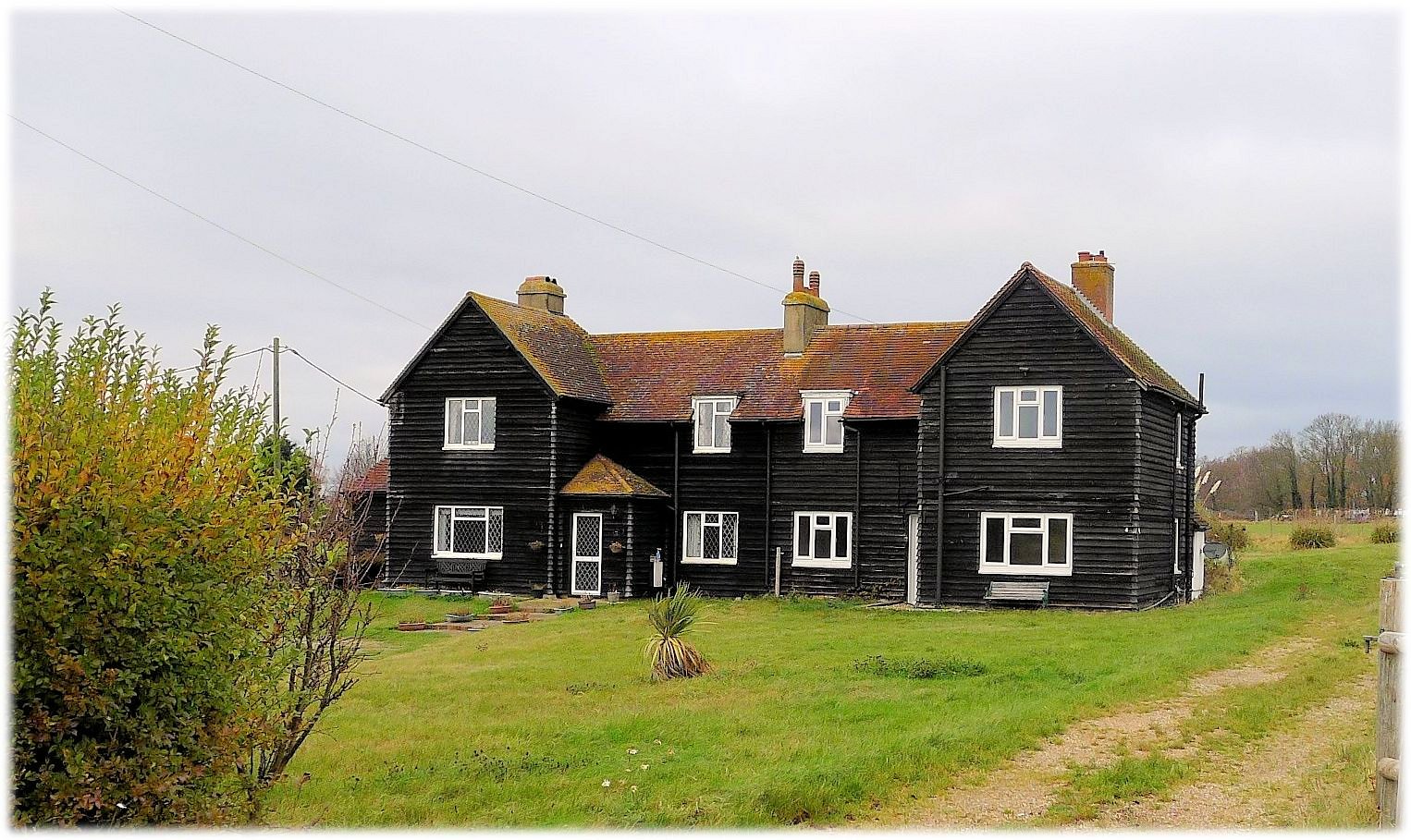
Sheep and Well Farms, Banstead
This was the last of the 3 larger post WW1 schemes and, arguably, the most successful. 308 acres were purchased as part of the sale of the Lambert Estate in March 1920 for £13,000. There were few buildings that could be re-used. It was decided that the average size of the smallholdings needed to be larger to be cost-effective and the typical smallholding was 3-5 acres. However, 3 sizeable “farms” were also created.
There were 35 smallholdings, with a 36th being split into 10 allotments. 33 bungalows were built and just one existing cottage renovated. Rather than build a pair of houses straddling 2 plots, each plot got a bungalow. They were conventionally built by W.H Brown (Leatherhead) Ltd for £1000 each and were of brick with rendering and with a fairly shallow slat roof. This scheme is the first time the author has come across the term “bungalow” when describing mass housing in Britain as it was usually to describe a timber structure near a coast (the word comes from India). W G Tarrant did build some timber farm buildings (on what became Hengest Farm). The early tenants complained of excess condensation but this was found to be mainly from the internal plaster not having had time to dry out. The 9” solid external walls were not helping and both the internal plaster and external rendering were treated. This seemed to resolve the problems. The houses were fairly basic inside and always cold and did not get a proper hot water system until the 1940s.
The bungalow in the picture to the right is one of the few where you can still visualise the original design. Even so, it has had an extension on one side. Most of the bungalows have, understandably, now been improved to bring them up to modern standards of insulation and efficiency.
Many of the early tenants remained for many years although it must have been a struggle for most. Many of the smaller plots were used for poultry breeding and eggs whilst the largest smallholding, Hengest Farm, became a successful dairy.

Summary
Outside the large cities and industrialised areas the need for housing “Fit for Heroes” was never going to be a major one. From the evidence in Surrey, the need seemed to be mainly for agricultural workers. Despite being an industrialised country, Britain grew a lot of its own food and the need for this to continue was very apparent during WW1 when the German U-boats sank almost 5000 ships, many bringing food in (at one point in 1917 Britain has just 6 week’s food in reserve). The increase in allotments and smallholdings after the war was also in reaction to the problem. It was also recognised that part of the recovery process for troops returning home was to give them an opportunity to have their own garden and an allotment, or to work on the land by renting a smallholding.
In Surrey’s case, the large size of the houses built after the War is a surprise – streets of terraced houses are no longer the standard. The proximity of the housing schemes to public parks and open spaces is also a pleasant surprise. The latter is in contrast to the big cities, London included, where “blocks” were still being constructed in built-up areas, although garden estates were being planned and built.
The assessment of the success of the Surrey schemes comes down to one thing – could the authority and the workers afford the housing? Costs immediately after the war were very high and it took 2 years for prices to come down both for materials and labour. Even where the schemes were approved and subsidised to a suitable level the rents that had to be charged were often beyond the means of those the housing was built for. As happened in London, the houses for the “working classes” were invariably rented by the artisan class, who could afford them. Maybe if the government had given priority to house building and not industry then the results might have been different.
But this is being critical of well-meaning Surrey councils who all wanted to build houses for their workers, particularly if there was a promise of subsidies. The success or failure usually came down to the skill and expertise of the committee members who had to make the choices. Only after WW2 were the large council estates built by the local authorities.
> Full details of Surrey’s post-WW1 housing, including photographs (pdf)
 Stilwell/Stillwell/Stillaway Genealogy